
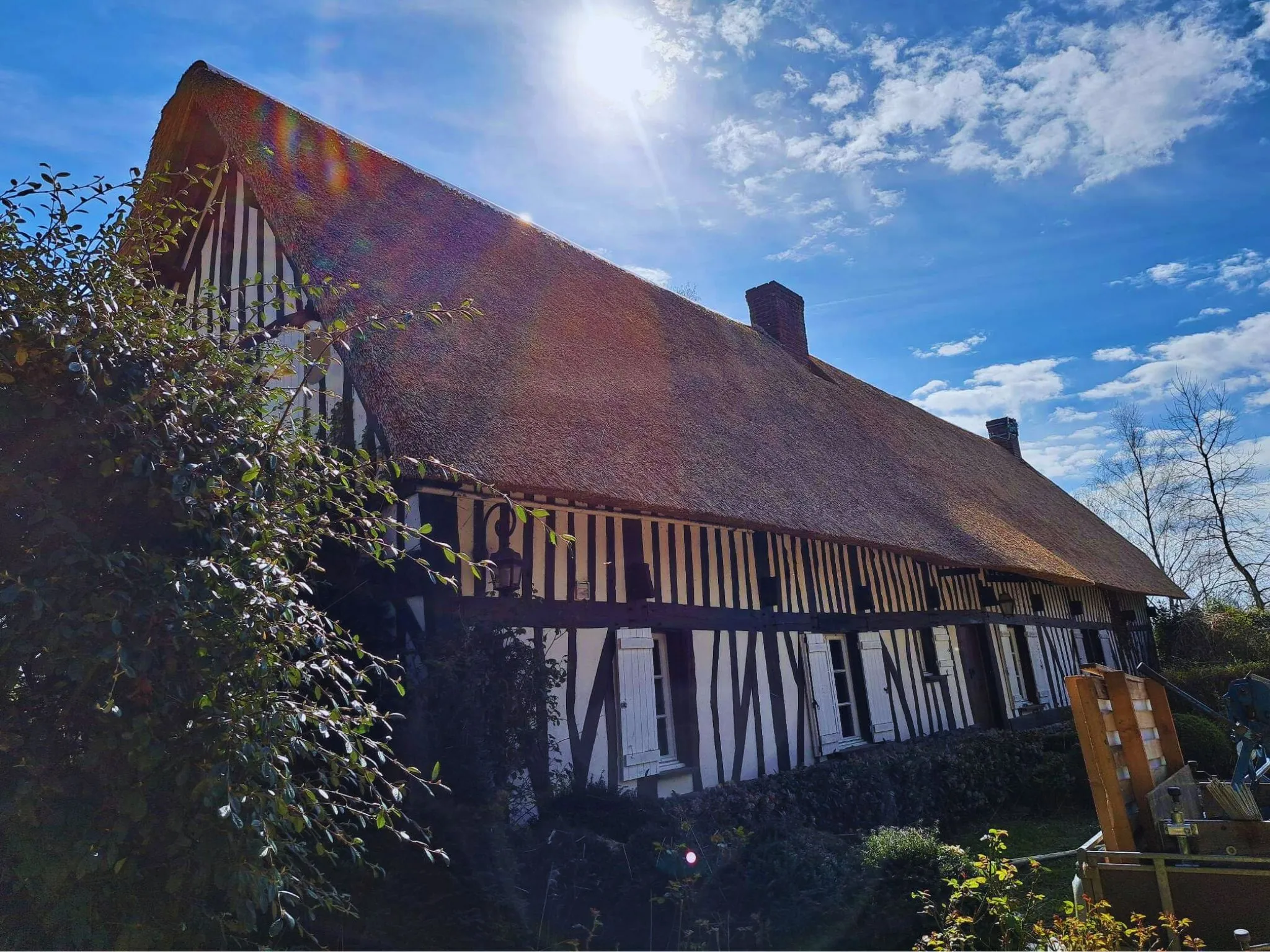
Premium thatched roofs across Hungary
New roofs, repairs, renovation and dismantling with Hungarian and Western European experience.
New roofs, repairs, renovation and dismantling with Hungarian and Western European experience.


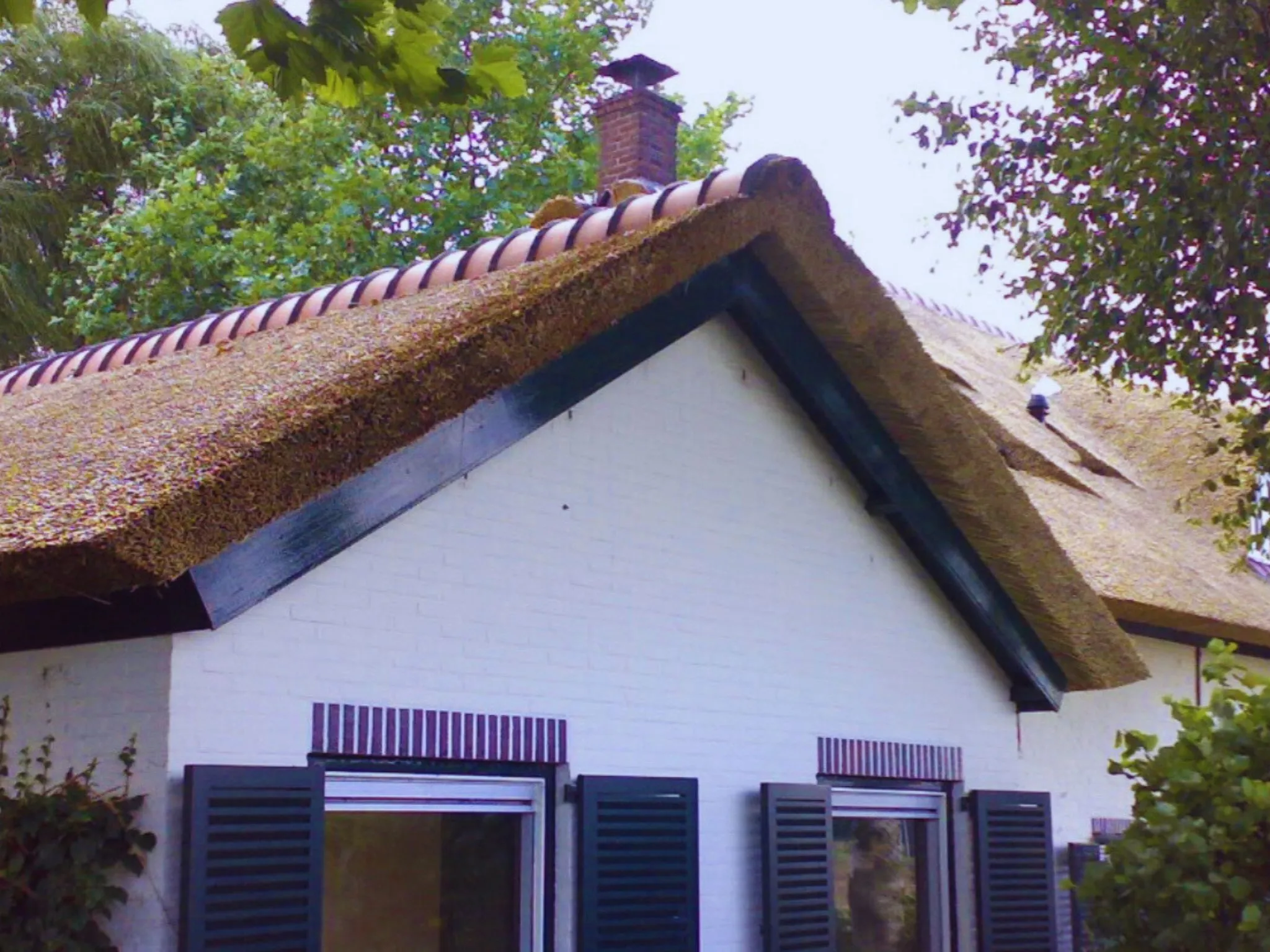
Fire safety around a thatched roof is not a matter of folklore or fear, but of workmanship, maintenance and everyday operation. Good construction, a tidy environment and thoughtful use together create the level of safety owners need.
Fire safety does not end at the roof plane. Outdoor kitchens, fire pits, chimney outlets and potential electrical faults all matter. Keeping a clean, visible zone around the building and avoiding unnecessary combustible accumulation are practical first steps.
Regular assessment matters from a fire-safety perspective as well. A neglected, thinning or locally damaged surface does not behave the same way as well-kept thatching. Maintenance is not only aesthetic; it is also part of safe operation.
A quick assessment is not alarmism. In many cases, targeted repair or a safety review is enough.
Thatched roofs and fire safety should be treated as a practical technical question. Good workmanship, orderly surroundings and regular inspection together provide the dependable safety level an owner needs.
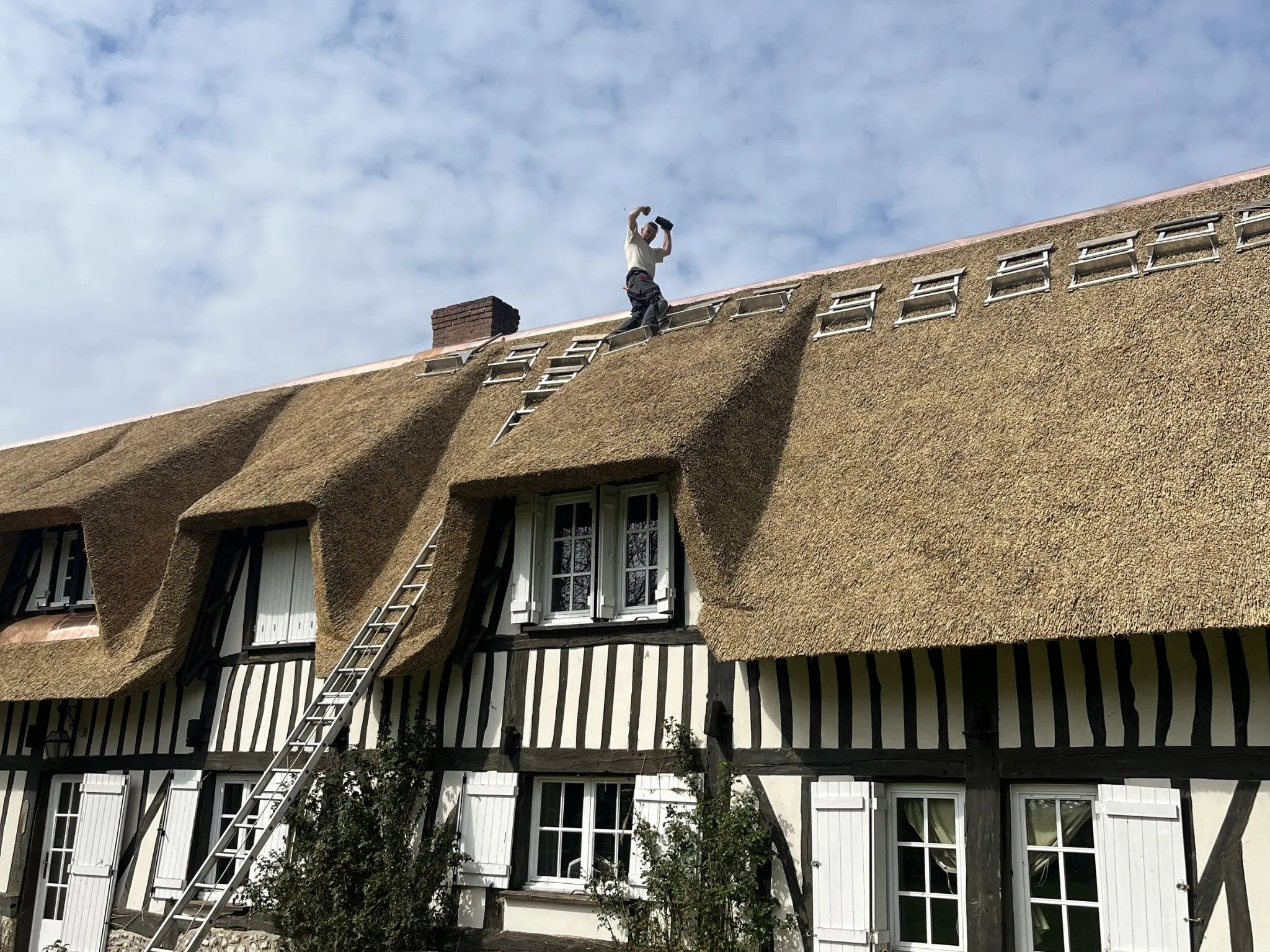
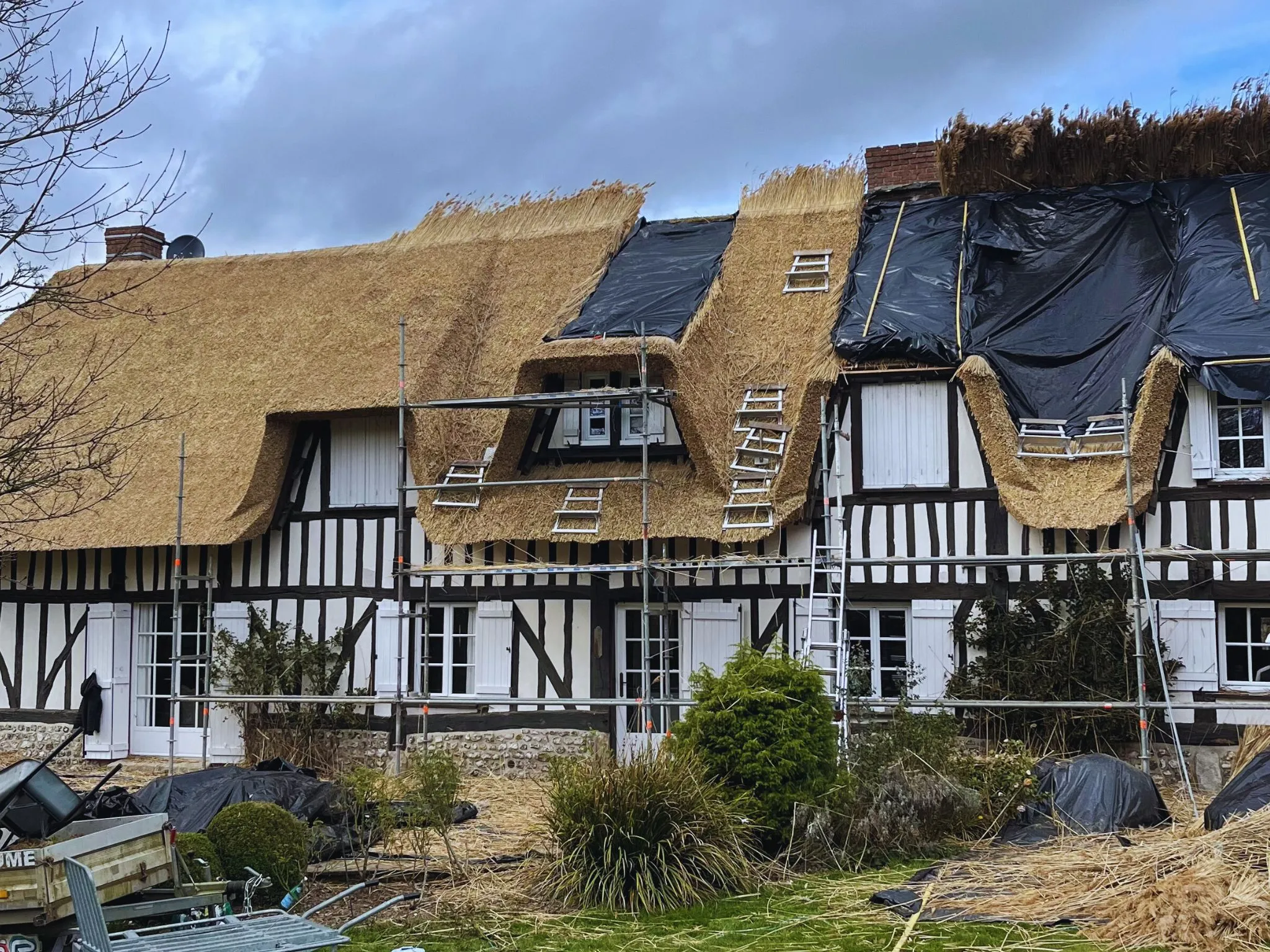

Request a fire-safety-oriented thatched roof assessment