
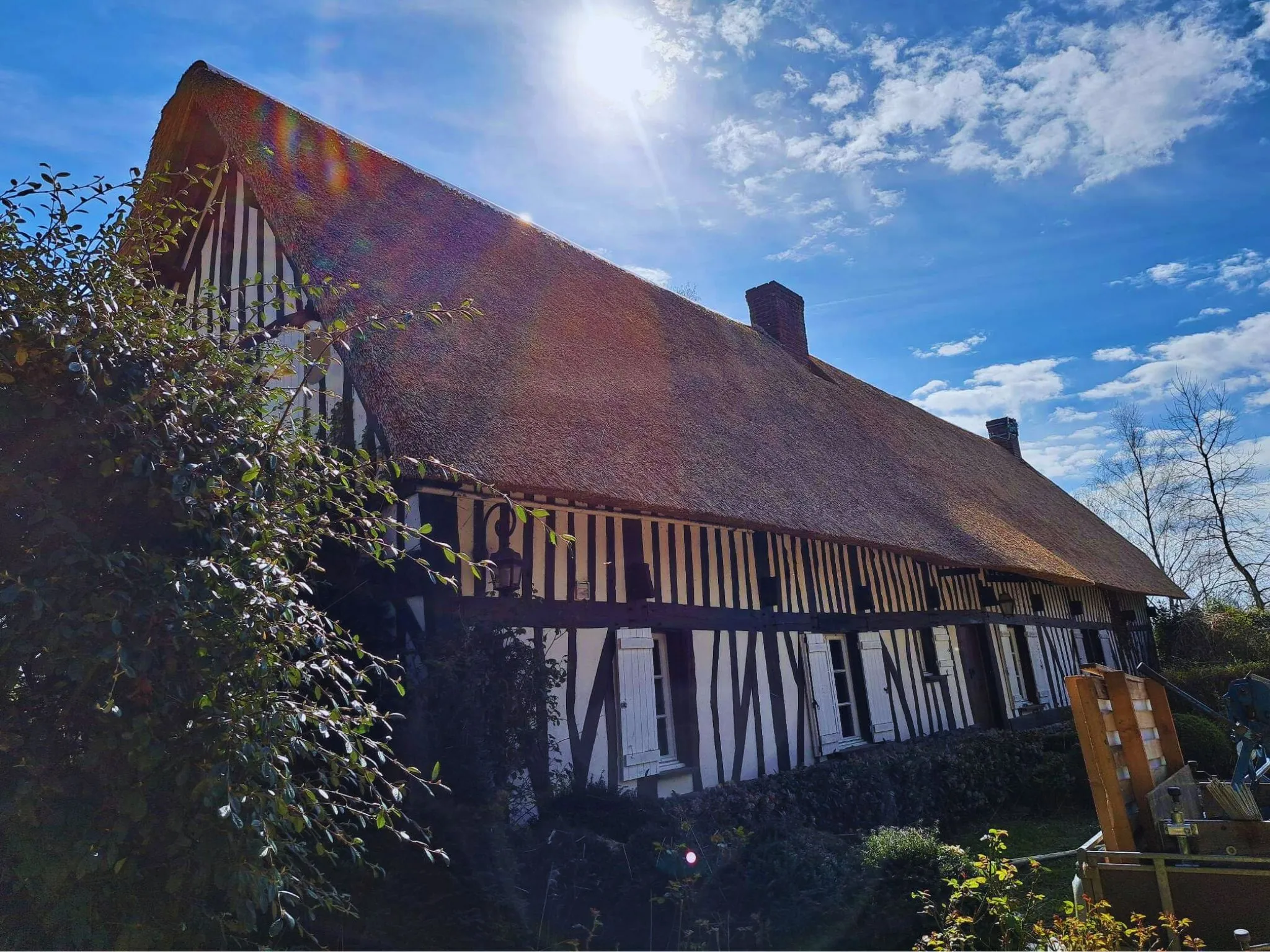
Premium thatched roofs across Hungary
New roofs, repairs, renovation and dismantling with Hungarian and Western European experience.
New roofs, repairs, renovation and dismantling with Hungarian and Western European experience.


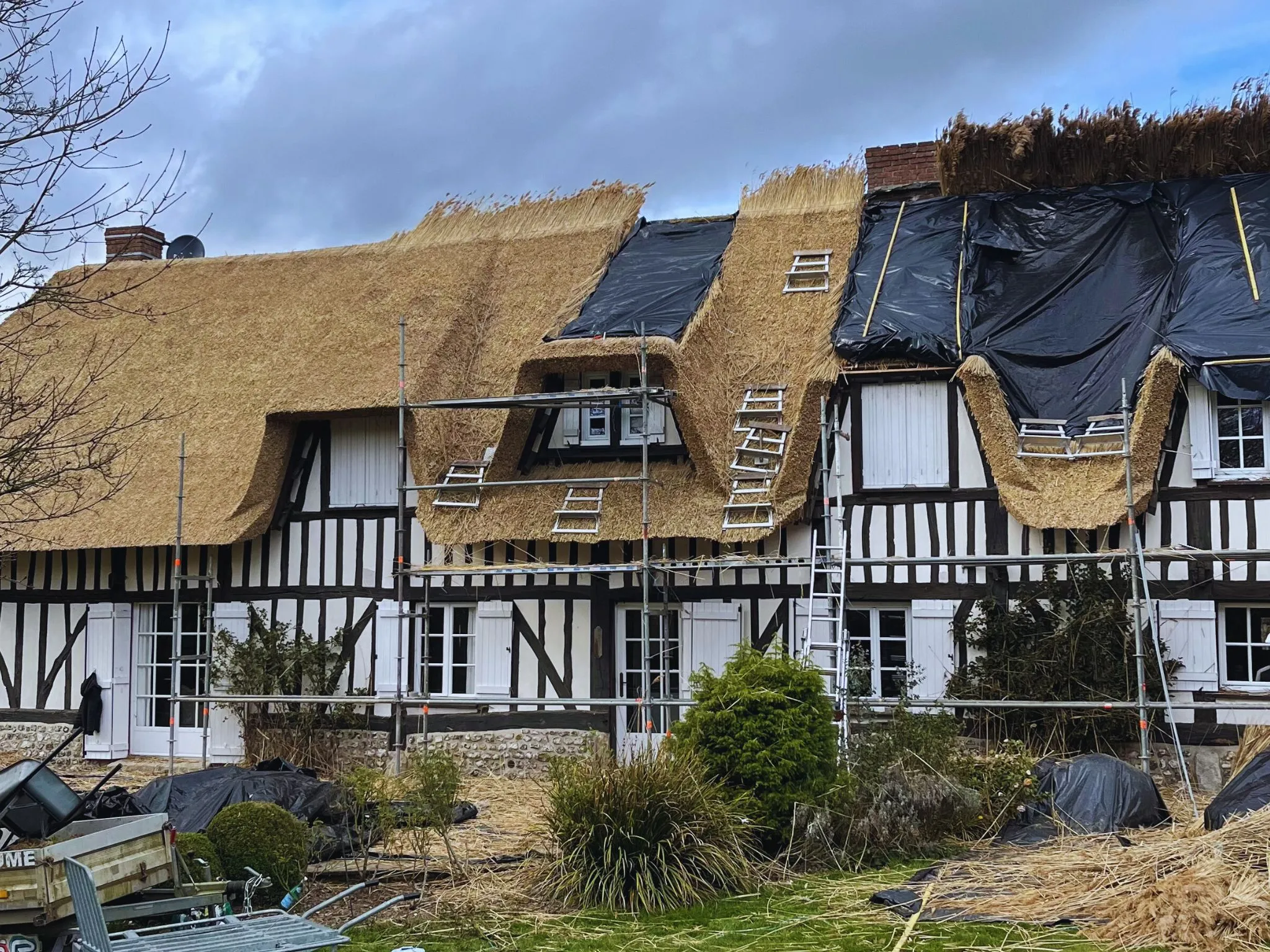
When a thatched roof leaks, delay is often the worst decision. In many cases the whole roof is not failing; there is a defined weak point that can still be identified and treated in time. The central question is where the water enters and how advanced the problem already is.
Density is crucial on the outer layer of a thatched roof. If areas open, loosen or begin to thin, rainwater can travel deeper. At first this may appear only as occasional leakage, but it can later affect wider sections.
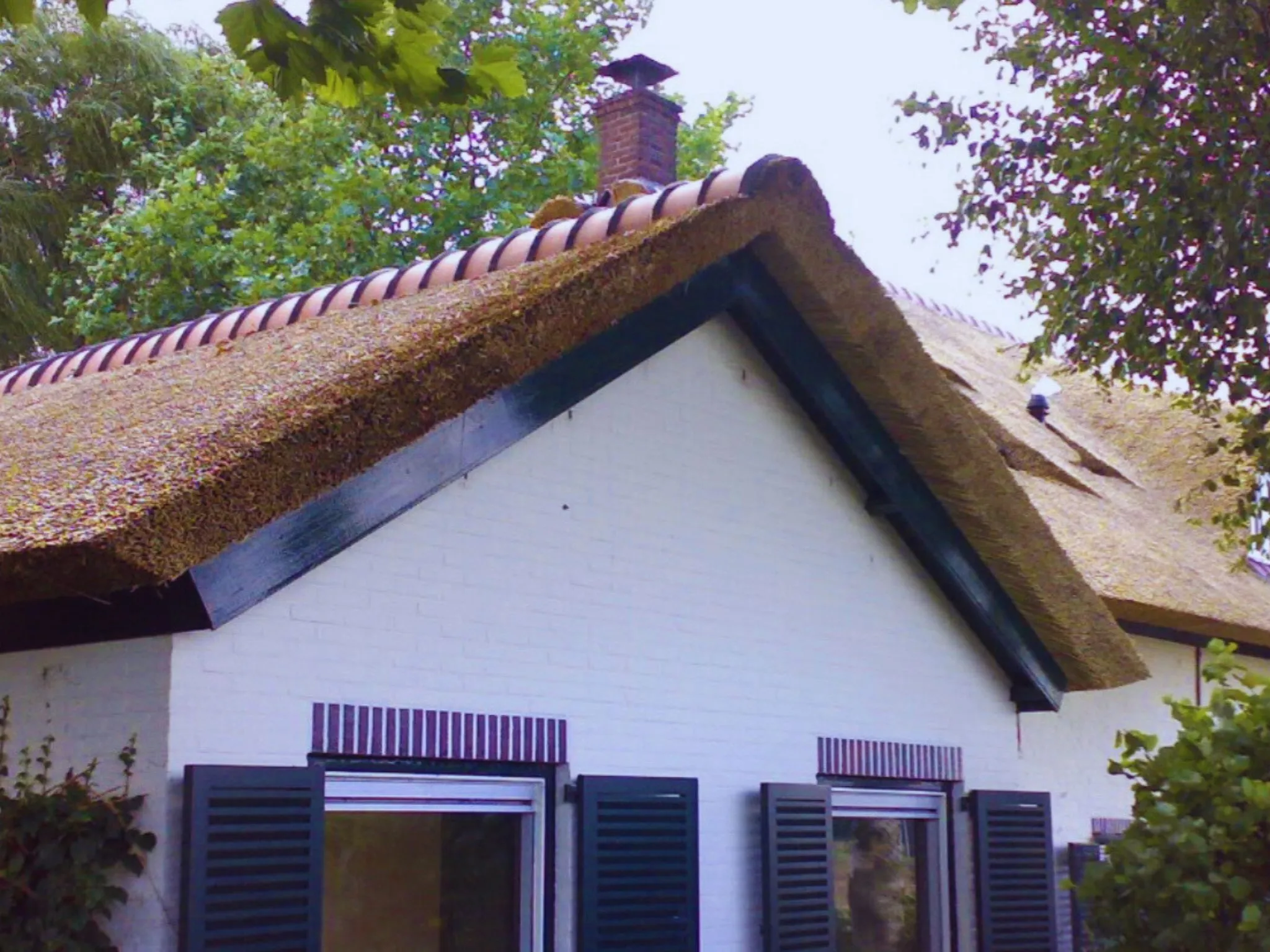
The ridge and edges are among the most sensitive parts of the roof. If covering breaks down there, water can often enter faster than across the broad roof planes.
Not every storm defect is obvious immediately. Wind, hail or a broken branch may cause local damage that only becomes visible during the next heavier rain.
Older roofs do not always age uniformly. Certain sides or strips may deteriorate faster because of weather exposure, so leaks can appear locally while the rest still looks acceptable.
If water cannot run off properly, or leaves more slowly at transitions and lower-pitched areas, the risk of leakage increases. Junctions and older structural compromises often deserve careful attention.
Sometimes a leak is the return of a previously half-solved problem. Incompatible materials or superficial patching may calm the owner briefly while making the long-term situation worse.
A leak does not always appear where the real defect is. Moisture entering at a flashing, penetration or sensitive junction may travel before becoming visible inside.
A quick assessment often determines whether a targeted repair is enough or a larger intervention should already be considered.
Several different causes can sit behind a leaking thatched roof, and many are still manageable when identified early. The priority is not guessing, but finding the real cause as soon as possible.

Request an assessment for a leaking thatched roof